
News & Events
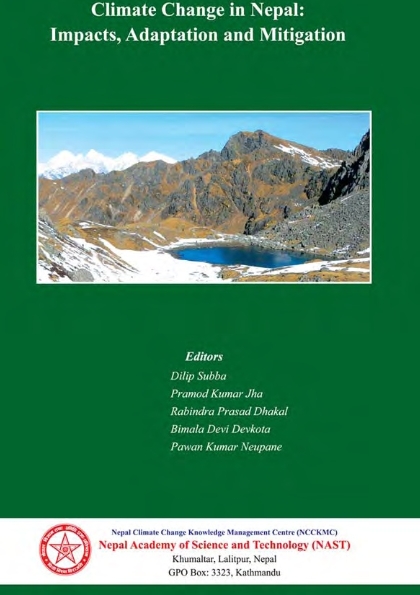
Ilam District, Nepal's Tea Growing Hub, Observed Climate Change Forum 2025
The 2024 UN Climate Change Conference (COP29) took place from November 11–24, 2024 in Baku, Azerbaijan. The key achievements of the conference are:
Daily Global average temperature reached a new record high 17.16°C on 22 July 2024
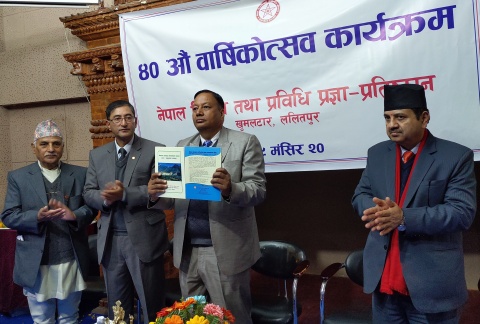
Experiences on Knowledge Management Shared
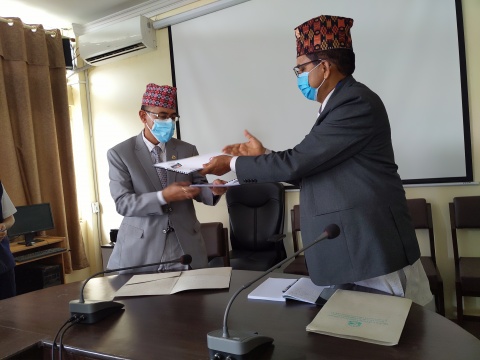
Nepal Climate Change Knowledge Management Center (NCCKMC) identified a need to sensitize and share the learning on climate change science, adaptation and mitigation practices along with its knowledge management at Sanskrit University of Nepal focusing on its impacts on Ayurveda.
Find brief report by clicking the link
http://www.ncckmcnast.org.np/publications/report-climate-change-awarenes...
NAST in collaboration with CDKN disseminated the findings of IPCC’s Fifth Assessment Report in Kathmandu, with a specific focus on implications for Nepal. Mr Pawan K Neupane and Dr Bimala Devkota from NCCKMC-NAST write about the event and its success
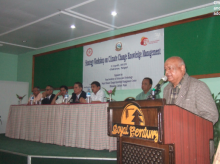
On April 9, 2013 Nepal Climate Change Knowledge Management Center (NCCKMC) organized a one-day Strategy Workshop on Climate Change Knowledge Management in Bharatpur, the headquarter of Chitwan district, Nepal. Climate change vulnerability mapping for Nepal, a report published by government of Nepal has listed Chitwan as high vulnerable district from climate change impacts.
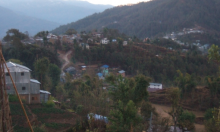
On February 17, Nepal Climate Change Knowledge Management Center organized Climate Change Awareness Program at Diktel, headquarter of remote mid hill district Khotang in eastern region of Nepal. Newly constructed earthen road has connected Diktel with low land urban area. According to the report on Climate Change Vulnerability Mapping for Nepal published by Government of Nepal, Khotang district is at very high risk from Glacial Lake Outburst Flood (GLOF).
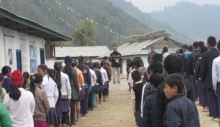
On Feb 8, the weather at Gopetar, a small village located over 2,000m altitude en-route between Taplejung and Panchthar in the Mechi Highway was very cold when the Mobile Campaign for Climate Change Awareness spearheaded by Nepal Climate Change Knowledge Management Center (NCCKMC) reached there to organize the on- the-spot climate program at Sirijung Higher Secondary School.

Nepal Climate Change Knowledge Management Center (NCCKMC) successfully organized the Climate Change Awareness program at Simkot, the headquarters of Nepal's most remote high mountain district Humla in farwest Nepal bordering Tibet of China. Situated at the altitude of 3,000 m asl, Simkot (Nepali Sim= wetland; Kot= offial town) is beautifully located on the lap of the mountain and surrounded by snow mountain range of Api Saipal.
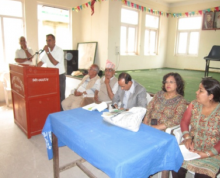
With the aims of creating awareness on climate change and to learn the situation facing by the local community of the place, the Climate Change interaction program was organized at Bhakti Namuna Higher Secondary School, Bhoteodar, Lamjung on April 2, 2012. Altogether there were 80 participants including school teacher, students from class XI and XII, representative from the political parties and local organizations.
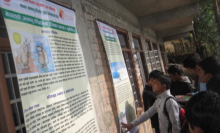
On Feb 9, NCCKMC organized on-the- spot climate program at Adarsh HS School at Ilam Bazaar, Nepal’s most popular tea growing hilly area in the east. The school, established in 1948, is Nepal’s first public high school and has enrollment of over 2000 students. Mr Dhan Raj Rai, the School Principal accepted without a second thought when Mr Bhojraj Adhikary the coordinator of the campaign proposed to organize the climate program at the school.
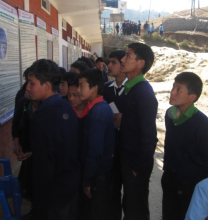
Fungling Bazar, the headquarters of Nepal's remote mountainous district Taplejung observed a day-long activities on climate change and its impacts on Feb 7, attracting hundreds of enthusiastic high school students who were well dressed in their school uniform.